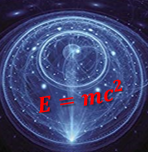
The Energy-Mass relation indicates that in remote times there was a great explosion
DOI:
https://doi.org/10.14331/ijfps.2019.330127Keywords:
Remote times, Energy-Mass-Speed, Theory of the Meeting (TM)Abstract
When we read about an author who pretends to deduce the expression by mathematical procedures, we will see him rely on fallacies and lock himself into real labyrinths. What we mean is that he will intend to introduce the fallacy of time dilation and the inappropriate use of the Lorentz factor intervention. Moving away from these false paths, we do not treat the expression as a mathematical formula, but instead, we investigate it as an expression on how to group these three physical magnitudes: Energy-Mass-Speed of light, in order to produce a work. With this approach, we will see that is the expression of the history of an atom and the manifestation of the energy that it is capable of supplying. For this, we have created the Theory of the Meeting (TM) that allows us to go to the origin of when this energy was generated. We leave for consideration, analysis, and criticism, for experts in astrophysics and atomic physics.
Downloads
References
Viladesau, E. M. (2008). Theory of Relativity: LAP Lambert Academic Publishing Okt
Viladesau, E. M. (2018a). Theory of relativity-atomic watches and time dilation. International Journal of Fundamental Physical Sciences (IJFPS), 8(1), 1-4.
Viladesau, E. M. (2018b). Theory of relativity: Analysis of Lorentz transformation and Lorentz factor. International Journal of Fundamental Physical Sciences (IJFPS), 8(3), 87-91.
Viladesau, E. M. (2018c). Theory of special relativity: False premise that leads to obtain incorrect conclusions. International Journal of Fundamental Physical Sciences (IJFPS), 8(2), 83-86.
Viladesau, E. M. (2019). Theory of Relativity: The Fallacy of the Principle of Equivalence. International Journal of Fundamental Physical Sciences (IJFPS), 9(1), 6-9.
Published
Issue
Section
License
Copyright (c) 2019 International Journal of Fundamental Physical Sciences

This work is licensed under a Creative Commons Attribution-NoDerivatives 4.0 International License.


 WorldCat
  Scilit
  ORCID
ORCID  Dimensions
  Mendeley
  Lincoln Library
  Cambridge iDiscover